


The Hybrid Future of Care: Introducing Virtual Care

11 February 2026
For decades, we’ve equated good care with physical presence. More visits. More checks. More people through the door. It’s an understandable assumption. Care has always been something you go to, or that comes to you.
But with demand rising, national workforce shortages and budgets at breaking point, the model needs to change. As a sector, we’re also realising more physical visits do not automatically mean better outcomes. In some cases, they can go against someone’s wishes or disrupt their daily routine.
The future of care will not be defined by how often someone is visited, but by how well they are supported, emotionally, practically, and proactively, every day.
From reactive care to continuous connection
Traditional care systems are largely reactive. We respond when something goes wrong: a fall, a missed medication, crisis points. Even well-intentioned visit-based models often struggle to provide continuity, early insight, or meaningful non-intrusive human connection.
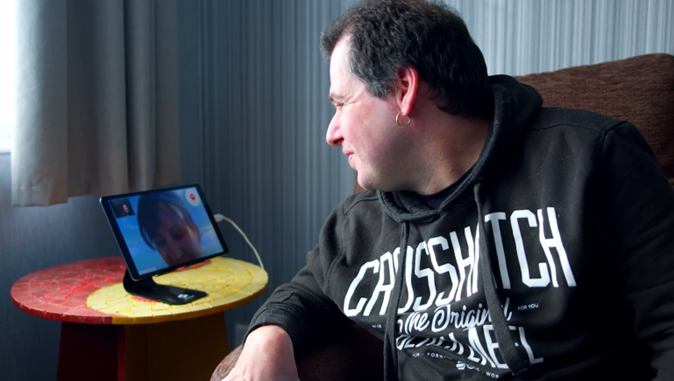
Virtual Care extends human care beyond the visit. Real carers provide remote video calls where no physical care is required, supporting routines, wellbeing, and medication in a way that fits naturally into everyday life.
Complementing traditional care, a person might receive a combination of in-person visits with physical care provided by a domiciliary carer, and strengths-based Virtual Care visits to support independent living – often a perfect combination tailored to their needs that is less intrusive and encourages independent living.
Human relationships, supported by intelligence
At the heart of effective Virtual Care is something very traditional: Relationships. Familiar carers. Consistency. Trust. Reassurance.
What’s changed is how those relationships are supported. Intelligent systems can generate care summaries and surface changes in routine and early risk indicators in real time, enabling earlier, more informed support before issues escalate.
Not to make decisions instead of people, but to help carers have better, more informed conversations. This shift allows care to move from “checking in” to actively supporting. From responding to crises to preventing them. From generic schedules to personalised, outcomes-led support.
Care becomes something that happens with people, not to them.
Choice, dignity, and independence
Virtual Care offers an alternative where traditional care can feel intrusive (frequent visits, rigid schedules, unfamiliar faces) and undermine a person’s sense of control, even when the intent is support.
Through a simple ‘one touch’ device, people can receive regular contact, prompts, and reassurance in a way that feels less medical and more like everyday life continuing. For those at risk of digital exclusion (particularly older and disabled adults in low-income households), this access can be a powerful enabler, supporting digital reablement, hospital-at-home approaches, and reducing isolation.
Better outcomes for people — and for the system
When care is proactive, consistent, and data-informed, the impact extends beyond individual wellbeing. Earlier intervention helps reduce avoidable hospital admissions, and Virtual Care delivers demonstrable cost savings compared to domiciliary care alone, achieving a minimum 3:1 return on investment and strengthening social care resilience.
Alleviating workforce shortages, Virtual Care can open up care delivery to the ever-growing home-based workforce, allowing care capacity to safely scale and resources to be targeted where physical visits truly add value. Routine virtual support complements in-person care without compromising quality.
The result is a more sustainable system.
Redefining what “good care” looks like
At the heart of Virtual Care are people’s lives, routines, and data-informed intervention. As part of a hybrid model, it strengthens relationships, enables earlier proactive support, and protects independence while focusing in-person care where it adds the most value.
This blended approach allows care to be more personal, more proactive, and more dignified, with time used for connection, not just tasks, and care fitting into people’s lives, rather than people fitting around care.
In the hybrid future of care, “good care” is defined by how well people are supported to live the life they choose.
If you would like more information about Virtual Care, please contact growth@alcove.care
Share this page:
Partners & Associates






Contact our team
01625 520 320
Discuss how our team can help you


