

National Sector Support Group
TSA has brought together leading organisations from across the technology enabled care sector to support a new programme aimed at growing investment in TEC. Each of these sponsors shares a view that only through collective action can they take the biggest barriers to investment and highlight the value that TEC can bring.
Acting as an independent convenor, TSA is working with sponsors, commissioners, policy makers and sector partners to strengthen the evidence, messaging and practical guidance needed to increase confidence and investment in TEC.
Who's involved
The TEC National Sector Support Group (NSSG) is being supported by Alcove, Access Group, Careium, Chiptech, Legrand Care, Taking Care and Tunstall Healthcare, with each organisation committing to a multi-year investment in the programme.
 |  |  |
 |  |  |
|  |
|
Why it was formed
Multiple drivers of change in the health, housing and social care sectors should all see investment in TEC growing. Despite strong examples of impact across the UK, investment in TEC remains inconsistent. Policy makers in government don't have the evidence they need in the formats they want it to encourage further investment. Local authorities face competing pressures, limited capacity, varying levels of evidence and a lack of common measures to support investment decisions.
The group has been formed around a clear aim: to help more decision makers understand the value of TEC, invest in it with confidence and recognise its role in delivering better outcomes for people who draw on care.
Projects the group is working on
Year one of the programme has four connected workstreams:
- Stronger messaging: developing clearer messaging around the value of TEC for central government, local government, commissioners and finance leaders based on the priorities that these stakeholders have. The work will focus on communicating the contribution TEC makes to prevention, demand management, productivity and service sustainability using language and measures that resonate with decision makers.
- A stronger evidence base: stronger messaging needs to be backed up by compelling evidence. Bringing together existing published evidence, public sector data and a minimum dataset from sponsors, will allow the sector to make a more credible case for investment. The programme will also explore the development of common measures, shared definitions and approaches to impact assessment that allow outcomes to be understood more consistently across the sector.
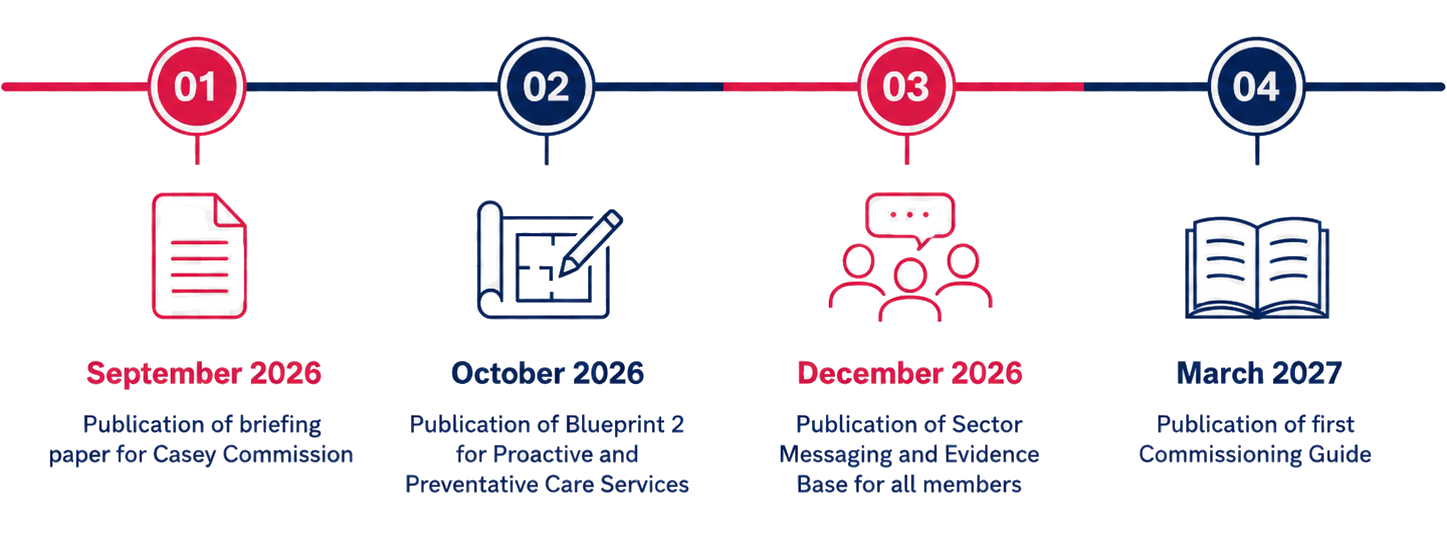
- TSA ADASS Blueprint 2: Following on from the success of the Proactive and Preventative Care Services Blueprint launched in 2025, this update will draw on 12 months of learning through benchmarking, rapid assessments and implementation programmes. Blueprint 2 will include stronger guidance on service design, evaluation, financial modelling, common metrics and practical approaches to scaling successful services. Blueprint 2 is expected to be launched in October 2026.
- A TEC commissioning guide: creating a sister document to support local authorities to commission TEC supporting current service pressures while creating the foundations for preventative, community based and neighbourhood health models of care. This will be released at ITEC 2027.
A major output from the first phase of the programme will be a sector briefing intended to inform discussions taking place through the Casey Commission review and the wider adult social care reform agenda. Baroness Casey’s review is looking at prevention, productivity and sustainability in adult social care, which are three areas where TEC has an important contribution to make.
The briefing will bring together the current evidence position, the data gap, the scale of the sector and a value case for TEC. It will give TSA a sector backed document to use in engagement with policy makers at a point when the future direction of adult social care policy is being shaped. For sponsors, this is a clear example of collective investment creating something that no single organisation could produce alone. The programme will also begin laying the foundations for a clearer understanding of the scale, impact and contribution of the TEC sector, helping to inform future policy, commissioning and investment decisions.
While funded by industry sponsors, the outputs of the programme are intended to benefit the wider TEC sector and the organisations responsible for delivering health, housing and social care services. We will keep you informed through TSA’s channels of progress and opportunities.
Timelines
Future ambitions
Our ambition is to help create the sector infrastructure needed to support the safe, sustainable growth of technology enabled care across the UK.
We believe that achieving this requires more than individual research projects, better products or stronger advocacy. It requires the shared infrastructure that enables the sector to mature with confidence, including trusted evidence, common methodologies, stronger partnerships and practical implementation support.
As part of that ambition, we are creating the UK's first national evidence infrastructure for technology enabled care, designed to generate decision-grade evidence for policy makers, commissioners and investors. The programme will bring together operational data, independent research and public sector datasets, creating the shared data, partnerships and methodologies that enable high-quality evidence to accumulate over time into a trusted national resource.
Frequently asked questions
Answers to frequently asked questions about the National Sector Support Group can be found in our FAQ document.
If you have a question that hasn't been answered in the FAQ document, or for more information on the National Sector Support Group, contact admin@tsa-voice.org.uk.
Partners & Associates






Contact our team
01625 520 320
Discuss how our team can help you


